Don’t miss anything! Sign up for my newsletter & join our Facebook community of 1,000+ like minded thinkers!
- Home
- Science vs God
- A Universe from Nothing
A Universe from Nothing: Did Everything Come From Nothing?
I care about nothing, and this post is about nothing. Yes, you read it right: nothing. Stephen Hawking, in his book Stephen Hawking: The Grand Design, makes the amazing claim that “because there is a law such as gravity, the universe can and will create itself from nothing”.
Lawrence Krauss, an American theoretical physicist and cosmologist who is Foundation Professor of the School of Earth and Space Exploration at Arizona State University, argues the same thing in his book, A Universe From Nothing: Why There Is Something Rather Than Nothing (Free Press, 2012). According to Richard Dawkins: “The title means exactly what it says. And what it says is devastating”.
Enjoy this short video of Hawking claiming that the universe did come from nothing:
I am currently also reading a book about nothing titled Nothing: A Very Short Introduction. I can tell you one thing for sure: it is NOT about nothing.
Key Ideas in Brief
- Scientific Claims: In Stephen Hawking: The Grand Design, the author argues the universe creates itself from nothing based on laws like gravity.
- Defining "Nothing": A critical distinction exists regarding Quantum vacuum vs. nothing; scientific "nothing" often refers to empty space or fields rather than absolute non-being.
- Theological Perspective: Theologians argue for creation ex nihilo (out of nothing), but with God as the necessary acting force.
- Logical Consistency: Critics argue that "something" creating itself is logically absurd, as it would have to exist before it existed to perform the creation.
- Historical Science: Many foundational scientists believed that the diversity of the natural world required the will of a necessarily existing Being.
Defining the Quantum Vacuum vs. Nothing
Now the question before us is, “What do Krauss and Hawking mean by nothing?” They do NOT mean non-being — no "no-thing". David Albert, a professor of philosophy at Columbia and the author of Quantum Mechanics and Experience, wrote regarding the work of Krauss:
…the fact that particles can pop in and out of existence, over time, as those fields rearrange themselves, is not a whit more mysterious than the fact that fists can pop in and out of existence, over time, as my fingers rearrange themselves. And none of these poppings — if you look at them aright — amount to anything even remotely in the neighborhood of a creation from nothing. Krauss, mind you, has heard this kind of talk before, and it makes him crazy. A century ago, it seems to him, nobody would have made so much as a peep about referring to a stretch of space without any material particles in it as “nothing.” And now that he and his colleagues think they have a way of showing how everything there is could imaginably have emerged from a stretch of space like that, the nut cases are moving the goal posts. He complains that “some philosophers and many theologians define and redefine ‘nothing’ as not being any of the versions of nothing that scientists currently describe,” and that “now, I am told by religious critics that I cannot refer to empty space as ‘nothing,’ but rather as a ‘quantum vacuum,’ to distinguish it from the philosopher’s or theologian’s idealized ‘nothing,’ ” and he does a good deal of railing about “the intellectual bankruptcy of much of theology and some of modern philosophy.” But all there is to say about this, as far as I can see, is that Krauss is dead wrong and his religious and philosophical critics are absolutely right. Who cares what we would or would not have made a peep about a hundred years ago? We were wrong a hundred years ago. We know more now. And if what we formerly took for nothing turns out, on closer examination, to have the makings of protons and neutrons and tables and chairs and planets and solar systems and galaxies and universes in it, then it wasn’t nothing, and it couldn’t have been nothing, in the first place. And the history of science — if we understand it correctly — gives us no hint of how it might be possible to imagine otherwise. Source
Nothing is just that — nothing.
If I say, “I ate nothing for lunch,” you would be silly if you asked me, “How did it taste?”
These men, with all due respect, are playing games with words.
The term "nothing" means "nothing" to the vast majority of their fans and readers, but they don’t mean "nothing" when they say it; however, it sells a lot of books.
They are equivocating, which is a logical fallacy.
Creation Ex Nihilo and the Limits of Science
Theologians tell us that God created the universe ex nihilo (from nothing), but He did it; He was the acting force behind it. But can a world where there is no God, where there is nothing, even exist?
See the Stanford Encyclopedia of Philosophy on this issue from a scholastic point of view.
First, we have to define nothing. Frank Close, professor of theoretical physics at the University of Oxford, wrote that the “nothing” these cosmologists talk about is, in fact, something.
He says that “nothing” is:
“the quantum void, infinitely deep and filled with particles, which can take on different forms”. (Nothing: A Very Short Introduction, Frank Close (Oxford), 144
He also stated in his article “Much Ado About Nothing” that
“Aristotle was right: There is no thing that is nothing”.
I admit Hawking and Krauss are brilliant and have knowledge about black holes and cosmology that I don’t know the first thing about — but it does not take a PhD in physics to see nonsense even at the highest level of the academy.
Logic, Irony, and the Origin of the Universe
Atheists like Dawkins ask, “Who created God?”
It is so ironic to me that when a theist tells them that nothing created God, they laugh and will not accept that answer; but when scientists tell us that a Universe from Nothing created everything, they bow their knees in wonder and awe. Is this not ironic?
Now back to Hawking: did everything come from nothing? Dr. John Lennox, Professor in Mathematics at Oxford University, responds to the assertion that “the universe can and will create itself from nothing” by saying, “That sounds to me like something out of Alice in Wonderland... it’s not science! From nothing, nothing comes!”
Logically speaking, if something created itself, it would have to exist before it did that, and that is absurd.
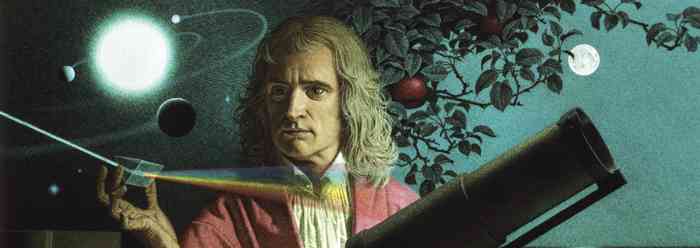
As Isaac Newton wrote in The Principia:
“Blind metaphysical necessity, which is certainly the same always and everywhere, could produce no variety of things. All that diversity of natural things which we find suited to different times and places could arise from nothing but the ideas and will of a Being, necessarily existing”.
Most of the world’s scientists from the 14th and 15th centuries, such as Bacon, Galileo, Descartes, Kepler, and Newton, would be shocked by what Hawking and his like are sprouting.
Dr. Lennox rightly concludes: “What this all goes to show is that nonsense remains nonsense, even when talked by world-famous scientists”.
Exploring These Questions Personally
Some questions about faith and doubt cannot be resolved by arguments alone. They are lived, wrestled with, and experienced over time.
If you’d like thoughtful, non-judgmental ways to explore these questions more deeply, here are a few options:
Continue The Conversation
Wrestling with questions about God, faith, and meaning?
Join the newsletter for thoughtful reflections on belief, doubt, philosophy, and the search for truth, plus practical insights to live wisely, and believe courageously.
You Might Like These
Reason, God And The Meaning Of Life: Dr. Chris Firestone,PhD
Explore the limits of reason in Kant’s philosophy & what they mean for God, morality, and meaning of life in this conversation with philosopher Chris Firestone.
Unity of Truth and the Plurality of Faiths
Do all religions worship the same God? This lecture explores religious pluralism, universalism, and unity of truth through a philosophy of religion perspective.
Hell, the Soul, and Evil with Richard Swinburne
The philosophy of hell and the soul explored with Richard Swinburne — and how these ideas shape Christian philosophy of the afterlife and human nature.