- Home
- Spiritual Direction
What Should I Do With My Life? Five Ways to Find Spiritual Direction When You Feel Lost
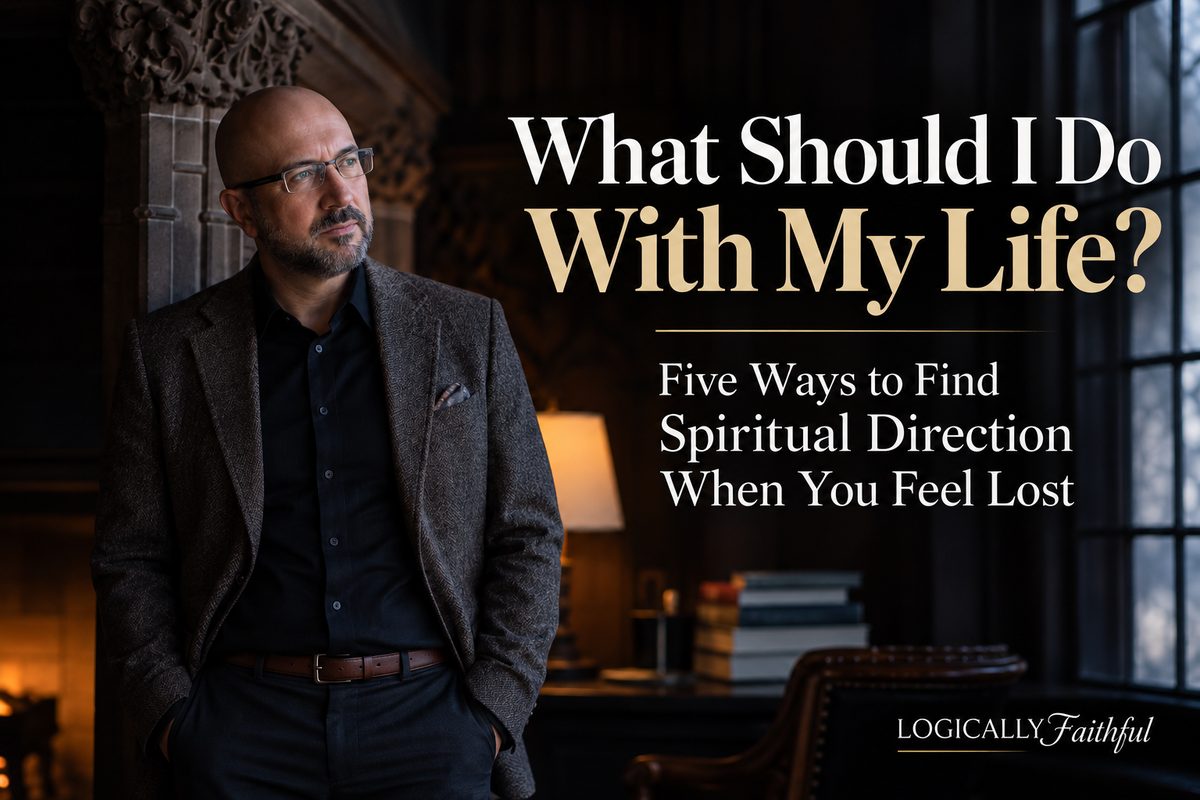
Why Your Failures Do Not Define You, Your Passions May Mislead You, and Your Purpose Is Greater Than Your Career
By Khaldoun Aziz Sweis, PhD
Have you ever awakened one morning, looked at the life you have built, and wondered, Is this really what I am supposed to be doing?
Perhaps you have worked hard, earned degrees, built a career, raised a family, or achieved what others consider success. Yet somewhere beneath your responsibilities and accomplishments, a disturbing question refuses to disappear: What am I actually doing with my life?
I hear it frequently from students, professionals, and successful men who have accomplished considerable things yet remain uncertain about their direction. Some are struggling after painful failures. Others are trapped in careers they no longer enjoy. Still others have achieved everything they thought they wanted, only to discover that success has not produced the fulfillment they expected.
We live in a culture obsessed with finding our passion, following our dreams, and reinventing ourselves. But what if we have been asking the wrong question?
Perhaps the deepest question is not "What should I do with my life?" but "What kind of person am I becoming, and what is my life ultimately for?"
The first question concerns careers, relationships, choices, and opportunities. The second concerns identity, truth, responsibility, love, and God. You can answer the first question while remaining completely lost about the second.
As Augustine wrote in his Confessions, our hearts remain restless until they find their rest in God. His insight is profoundly psychological as well as theological: we can spend our entire lives pursuing things that promise fulfillment yet are incapable of bearing the weight of our deepest longings.
Christian spiritual direction is not simply discovering a hidden blueprint for your career. It is learning to discern what is true, what is good, what deserves your love, and how to live responsibly before God.
Here are five principles that have helped shape my own understanding of that journey.
Start here
Direction begins with a relationship, not a plan.
Before you ask what to do with your life, ask who you belong to. Read my honest, plain language look at how the Christian message says we can come to know God.
Is It Possible to Know God? →1. Failure Is the Backdoor to Success
The first thing you must understand is that you are not a permanent failure simply because you have failed.
You may have made serious mistakes, lost important opportunities, damaged relationships, or watched years of effort end in disappointment. Some failures carry consequences that cannot easily be reversed. Yet failure is an event in your life, not necessarily a verdict on your identity or your future.
I recommend Dr. Erwin Lutzer's Failure: The Back Door to Success to people who feel trapped by past mistakes. Its Christian perspective reminds us that repentance, forgiveness, restoration, and growth remain possible even after painful setbacks.
Consider Michael Jordan, who led the Chicago Bulls to six NBA championships and won five regular-season MVP awards. His famous Nike advertisement describes the thousands of missed shots, lost games, and unsuccessful game-winning attempts that formed part of his career. His lesson was not that failure was enjoyable, but that it was inseparable from learning and achievement.
Thomas Edison likewise endured repeated unsuccessful experiments while developing practical technologies. His willingness to learn from unsuccessful approaches illustrates the distinction between something not working and the person attempting it being worthless.
But I have experienced this personally.
I remember keeping a folder containing more than 500 rejection letters from colleges and universities around the world while seeking a full-time academic position. Imagine receiving rejection after rejection despite years of education, preparation, and professional commitment. Eventually, rejection can become more than disappointing. It can begin to threaten your understanding of yourself.
I kept those letters as reminders to learn, improve, and continue. Looking back, they also taught me something more profound: academic institutions could determine whether to hire me, but they could not determine my ultimate worth as a human being.
Psychologically, we must distinguish guilt from shame. Guilt acknowledges that we have done something wrong; shame can convince us that we are something wrong. The first can encourage responsibility and change. The second can become a prison of self-condemnation.
Christianity offers an even deeper perspective. Peter denied Jesus three times, yet his failure did not become the final chapter of his life. In John 21, the risen Christ restores Peter and gives him renewed responsibility. The point is not that failure has no consequences, but that grace can make restoration possible.
Your worst moment does not have to become your permanent identity.
Rather than asking, Why did this happen to me?, consider asking, What is this experience revealing about my character, my assumptions, my choices, and what I have been trusting to give my life meaning?
Learn from failure, take responsibility, seek forgiveness where necessary, and continue moving forward. Sometimes the door that closes forces us to discover that we have been pursuing the wrong destination.
2. Focus on What Matters Most
There is a familiar illustration involving a glass jar, large rocks, pebbles, sand, and finally a little beer. If you fill the jar with sand first, you cannot fit the large rocks inside. But if you begin with the rocks, the smaller things can fill the remaining space.
The message seems simple: identify your most important commitments, attend to them first, and arrange the smaller obligations around them. The beer humorously reminds us that life should also include enjoyment and friendship.
But there is a deeper philosophical problem: How do you know which things deserve to be your largest rocks?
What if the priorities you are organizing your life around are themselves mistaken?
A man may genuinely believe that wealth, status, recognition, or professional success is the most important thing in his life. He may organize his calendar efficiently, make extraordinary sacrifices, and achieve his goals. Yet he could still discover that he has sacrificed the very relationships and values that made success worth pursuing.
C. S. Lewis explored this problem in his essay "First and Second Things," published in God in the Dock. His central insight is that secondary goods are damaged when we elevate them above more fundamental goods. Jesus expresses a related principle in Matthew 6:33 when he calls his followers to seek first the kingdom of God.
Augustine described this problem through what Christian thinkers call the ordering of our loves. The issue is not simply whether we love good things, but whether we love them appropriately. Wealth, family, achievement, pleasure, and recognition can all possess genuine value. Yet none can carry the weight of being our ultimate good.
Consider the successful executive who claims his family comes first but repeatedly gives them whatever time and emotional energy remain after everyone else has received his attention. His stated priority is family, but his repeated behavior reveals a different order of love.
Your calendar often reveals your actual priorities more accurately than your convictions do.
Michael Hyatt's work on focus and intentional living has helped me think more carefully about this. I encourage you to make an inventory of what truly matters and then compare it with how you spend your time.
Write down your five most important commitments. Then examine the previous seven days. Where did your attention, money, energy, and emotional investment actually go?
If the two lists do not agree, you may have discovered why your life feels fragmented.
Watch: Put First Things First
3. Become a Master of Your Time
If you do not learn to govern your time, your time will eventually govern you. You may awaken one morning to discover that years have disappeared into activities that mattered far less than you imagined.
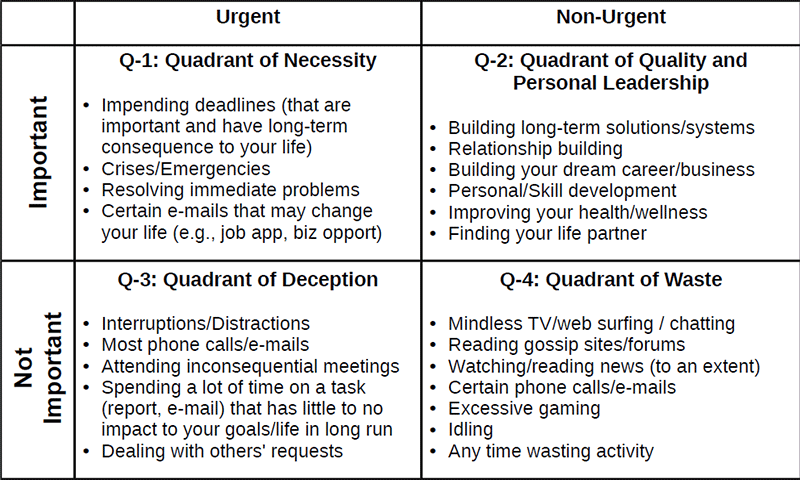
Stephen Covey's The 7 Habits of Highly Effective People remains one of the most practical books I recommend. Habit Three, "Put First Things First," challenges us to distinguish between what is urgent and what is genuinely important.
Urgent things demand our attention; important things deserve it. Unfortunately, the two are not always the same.
Emails demand immediate responses. Meetings fill our calendars. Deadlines generate anxiety. Meanwhile, physical health, spiritual formation, meaningful friendships, marriage, parenting, and intellectual development can deteriorate quietly because they rarely announce themselves as emergencies.
The danger is not simply poor productivity. It is living a life in which the demands of others gradually replace our deepest convictions.
Psychology confirms that constant interruptions and task-switching impose cognitive costs. But Christian theology adds another dimension: time is not merely an economic resource. It is part of our finite existence, entrusted to us for a limited period.
Psalm 90:12 asks God to teach us to number our days so that we may gain a heart of wisdom. Notice that the goal is not greater efficiency but wisdom.
A person can be extraordinarily productive and profoundly misguided. You can efficiently climb a ladder that has been leaning against the wrong wall.
In my executive coaching, I emphasize five practical habits: identify your three most important priorities, schedule uninterrupted time for demanding work, take intelligent breaks, work in focused intervals, and end each day with a brief review.
Get the Free Guide: 5 Research-Backed Ways to Be More Productive
Yet productivity must remain a servant, never a master. The Christian practices of Sabbath, prayer, contemplation, and rest remind us that our worth does not depend on uninterrupted output.
You were not created merely to accomplish more. You were created to live well, love wisely, and steward the time entrusted to you.
Before planning another week, ask yourself: If I knew I had only five years remaining, which activities would suddenly seem trivial, and which relationships would become indispensable?
Then consider why those discoveries should not influence the way you live today.
4. If You Could Do Something for Free, What Would It Be?
Imagine having enough money to meet your legitimate responsibilities without needing to earn another dollar. What would you spend your time doing? What activity would still seem meaningful even without applause, promotion, or financial reward?
Make a list of the things you would pursue, why they matter, and what preparation would be required to make them possible.
This exercise can reveal neglected interests, natural abilities, and desires that have become buried beneath family expectations, professional obligations, or fear.
But let me offer an important warning: Do not simply follow your passion.
Passion is a valuable source of motivation, but it is not an infallible guide to a meaningful life. Some passions are immature, some are temporary, and others are merely attempts to escape dissatisfaction. You cannot become anything whatsoever simply because you desire it intensely. If you have never trained as an athlete, you are unlikely to surpass Michael Jordan's or Michael Phelps's records. Nor can you become an astronaut without the necessary abilities, preparation, and opportunity.
Christian vocation demands something deeper than emotional excitement. It asks how our gifts, responsibilities, opportunities, and desires can be directed toward meaningful service.
Psychologists Edward Deci and Richard Ryan, through self-determination theory, have emphasized the importance of autonomy, competence, and relatedness in human motivation. Their research helps explain why lasting fulfillment often involves using our abilities meaningfully and connecting our efforts with other people.
But Christianity goes further. Sometimes our calling is found not in what we most enjoy doing, but in what love requires us to do.
Caring for an aging parent, remaining faithful through a difficult marriage, raising children, rebuilding a broken relationship, or serving someone unable to reward us may be profoundly meaningful even when the experience is exhausting rather than exhilarating.
Consider two possible futures. In the first, you continue your present habits for another five years. Imagine the cumulative effect on your body, mind, relationships, and spiritual life. What happens if nothing changes? How might those closest to you experience the consequences?
Now imagine returning home after a demanding day spent doing work that uses your abilities, contributes something genuinely worthwhile, and provides responsibly for those who depend upon you. You may still be tired, but your exhaustion has meaning.
The difference is not necessarily greater pleasure. It is a deeper alignment between your efforts and your values.
If changing careers is unrealistic today, begin smaller. Develop a skill, volunteer, take a course, explore an interest, or seek advice from someone whose life you respect. Purpose often becomes clearer through responsible action rather than endless introspection.
A meaningful calling is not simply what makes you feel alive. It is what enables you to live faithfully and contribute something worthwhile to the lives of others.
5. Know Your Purpose
My friend, philosopher Tom V. Morris, has written extensively about the relationship between wisdom, success, and human flourishing. His work has influenced my understanding of four foundational dimensions of a meaningful life: Truth, Beauty, Goodness, and Unity.
These are more than inspirational concepts. They provide a philosophical framework for examining whether our lives are becoming coherent, morally responsible, intellectually honest, and spiritually integrated.
Truth: The Intellectual Dimension
Truth requires the courage to confront reality even when it threatens our assumptions or preferences. Many people are remarkably intelligent yet deeply committed to self-deception. We rationalize our mistakes, defend our pride, and confuse comforting explanations with genuine understanding.
Christianity teaches that truth is not merely useful information but something essential to human liberation and our relationship with God. Jesus speaks of truth setting people free (John 8:32). Spiritual maturity therefore requires intellectual honesty, humility, and the willingness to admit when we are wrong.
Beauty: The Aesthetic Dimension
Beauty reminds us that life contains realities worthy of contemplation rather than consumption. Music, art, nature, friendship, worship, and moments of wonder cannot be reduced to productivity or economic usefulness.
A man may become extraordinarily wealthy while losing his ability to appreciate the ordinary beauty of a sunset, a conversation, a piece of music, or time with his children. He knows how to acquire things but has forgotten how to receive them.
Beauty can awaken gratitude and remind us that the world is a gift rather than merely an instrument of our ambitions.
Goodness: The Moral Dimension
Goodness concerns the kind of person we are becoming. Aristotle argued in the Nicomachean Ethics that human flourishing requires the cultivation of virtue. We become courageous, just, disciplined, and honest through repeated moral choices rather than merely admiring those qualities.
Christian theology places love at the center of this moral vision. Our accomplishments cannot be evaluated independently of how we treat others.
A successful career built upon dishonesty, exploitation, or the destruction of meaningful relationships cannot constitute a genuinely successful life.
Unity: The Spiritual Dimension
Unity concerns the integration of our intellectual, moral, emotional, relational, and spiritual lives. It is the opposite of fragmentation, where our public identity says one thing, our private desires pursue another, and our daily habits reveal a third.
Aristotle's concept of telos, or final end, helps illuminate the importance of purpose. Human beings do not flourish merely by satisfying random preferences; they flourish through the excellent development and exercise of their capacities.
Christian theology deepens this understanding by placing human existence within the framework of creation, the image of God, divine grace, redemption, and communion with our Creator.
I am convinced that a person cannot fully understand the deepest questions of personal identity and purpose without seriously confronting the question of God. We may know what we want to accomplish without understanding what we are ultimately made for.
The greatest tragedy is not failing to accomplish enough. It is accomplishing extraordinary things while becoming a stranger to your own soul.
What If God Seems Silent?
There is another question we cannot avoid: What happens when you pray for direction and nothing becomes clear?
You ask God to reveal your calling. You read Scripture, seek advice, consider different opportunities, and examine your circumstances. Yet uncertainty remains. Perhaps two choices seem equally reasonable, or perhaps neither offers the future you hoped for.
This experience does not necessarily indicate a lack of faith.
The Psalms repeatedly express uncertainty, grief, longing, and even the experience of God's apparent absence. Psalm 13 begins with the anguished question of how long God will seem to have forgotten the writer.
The Christian mystic John of the Cross explored periods of spiritual darkness in which familiar religious consolations disappear. His writings remind us that spiritual formation is not always accompanied by emotional certainty, although genuine psychological suffering must also be taken seriously on its own terms.
Ignatius of Loyola, in his Spiritual Exercises, developed a tradition of discernment that encourages careful examination of our desires, emotional movements, motivations, and spiritual commitments.
These insights are profoundly relevant today. We frequently mistake strong emotion for divine direction or assume that fear must indicate that something is wrong. But a wise decision can be difficult, and an attractive decision can be morally disastrous.
Spiritual discernment requires prayer, reason, honest self-examination, wise counsel, and responsible action. It does not guarantee perfect certainty.
God's guidance is not always a detailed map of the future. Sometimes it is the wisdom and courage to take the next faithful step.
This is where philosophy, psychology, and theology can illuminate one another. Psychology helps us recognize distorted thinking, emotional patterns, and avoidance. Philosophy challenges our assumptions about what makes life good. Theology asks how our choices relate to God, moral responsibility, and our ultimate purpose.
None eliminates life's uncertainty. Together, they can help us face it more responsibly.
Stop Waiting for Your Life to Begin
Perhaps you have been telling yourself that your real life will begin when you finish your degree, achieve financial independence, find the right spouse, build the right business, overcome a painful failure, or finally discover your passion.
But what if you have been postponing the very life you were meant to live?
You do not need a perfect career to become honest. You do not need extraordinary wealth to practice generosity. You do not need universal recognition to develop character. And you do not need every theological question resolved before beginning to pray.
Sometimes we mistake waiting for clarity with avoiding responsibility.
Søren Kierkegaard understood that the deepest truths about human existence are not merely ideas to contemplate. They must be appropriated through commitment and lived experience. There is a profound difference between knowing what matters and organizing one's life around it.
Perhaps you already know what needs to change. Perhaps the problem is not a lack of information but the courage required to act.
You may not need to discover a completely different life. You may need to begin living your present life with greater honesty, faithfulness, and purpose.
A Personal Challenge: Five Questions for the Next Seven Days
Set aside one uninterrupted hour this week. Put away your phone, close your computer, and resist the temptation to turn this exercise into another productivity task. Write honest answers to these questions:
- What am I most afraid of losing, and what does that reveal about my identity?
- What have my failures taught me about my assumptions, character, and priorities?
- Which relationships or responsibilities have I neglected while pursuing success?
- Where could my abilities meet a genuine human need?
- What is one concrete action I can take this week that reflects the person God is calling me to become?
Then act on the fifth answer. Have the difficult conversation. Acknowledge the mistake. Reconsider a decision. Make the appointment. Begin the neglected responsibility. Seek the wise counsel you have postponed.
Do not wait until every uncertainty has disappeared.
Conclusion: Perhaps You Have Been Asking the Wrong Question
When someone tells me, "I don't know what to do with my life," I understand the frustration. I have experienced rejection, wrestled with difficult decisions, and confronted the sometimes painful distance between personal ambition and meaningful accomplishment.
But increasingly, I believe that our deepest struggle is not simply determining what to do next. It is understanding whom we are becoming through the decisions we make.
Your career matters, but it is not your identity. Your failures matter, but they are not your ultimate definition. Your passions matter, but they are not infallible guides. Your time matters because your life is finite, and your relationships matter because love cannot be postponed indefinitely.
From a Christian perspective, spiritual direction is not merely discovering a successful plan for the future. It is learning to live in right relationship with the God who created us, the people we are called to love, and the responsibilities entrusted to us.
The question is not simply, "What should I do with my life?" It is, "What kind of person am I becoming, and is the life I am building worthy of the person God created me to be?"
You may not know precisely where the next chapter will take you. But you can begin today by living truthfully, choosing wisely, loving faithfully, and taking responsibility for the next meaningful step.
Books That Can Change How You Think About Your Life
Over the years, many books have significantly influenced my thinking about faith, business, success, character, and personal responsibility. Some were recommended through Michael Hyatt's work, while others have shaped my own philosophical and theological reflections.
Big Picture Books
- Thou Shall Prosper — Daniel Lapin
- Good to Great — Jim Collins
- The Magic of Thinking Big — David J. Schwartz
- StrengthsFinder 2.0 — Tom Rath
- Love Is the Killer App — Tim Sanders
Theological Books
- Desiring God — John Piper
- Knowing God — J. I. Packer
- The Knowledge of the Holy — A. W. Tozer
Strategy Books
- The E-Myth Revisited — Michael E. Gerber
- Business Secrets from the Bible — Daniel Lapin
- Focus — Al Ries
- Insanely Simple — Ken Segall
- Virtual Freedom — Chris C. Ducker
Productivity Books
- Essentialism — Greg McKeown
- Getting Things Done — David Allen
- The 4-Hour Workweek — Timothy Ferriss
- Margin — Richard Swenson
- The Power of Full Engagement — Jim Loehr and Tony Schwartz
- The War of Art — Steven Pressfield
Philosophy, Meaning, and Spiritual Formation
If you want to explore the deeper questions behind this article, these additional books are especially valuable:
- Confessions — Augustine of Hippo: On desire, restlessness, sin, grace, and the human search for God.
- Man's Search for Meaning — Viktor E. Frankl: On meaning, responsibility, and the human response to suffering.
- The Spiritual Exercises — Ignatius of Loyola: On discernment, prayer, and examining the direction of one's life.
- The Imitation of Christ — Thomas à Kempis: On humility, discipleship, and inward spiritual formation.
- I and Thou — Martin Buber: On the difference between using others and encountering them as persons.
- The Sickness Unto Death — Søren Kierkegaard: On despair, identity, and the self's relationship to God.
- The Seven Storey Mountain — Thomas Merton: On spiritual searching, conversion, and the contemplative life.
These books approach the human condition from different perspectives. Read them critically, but allow them to challenge your assumptions about success, happiness, freedom, and what makes life worth living.
Continue Reading: More on Purpose, Faith, and the Good Life
If this article spoke to something you are experiencing, I encourage you to explore these related essays.
Stop Seeking Happiness: Finding the True Purpose of Life — Why pursuing happiness as an end in itself can leave us empty, and why duty, virtue, and spiritual purpose may lead to something more enduring.
When Success Stops Feeling Like Success — What happens when achievement no longer delivers the satisfaction you thought it would, and why personal success is not always the same as human flourishing.
The Longing You Cannot Explain — An exploration of the persistent human longing that achievement, pleasure, and external recognition cannot fully satisfy.
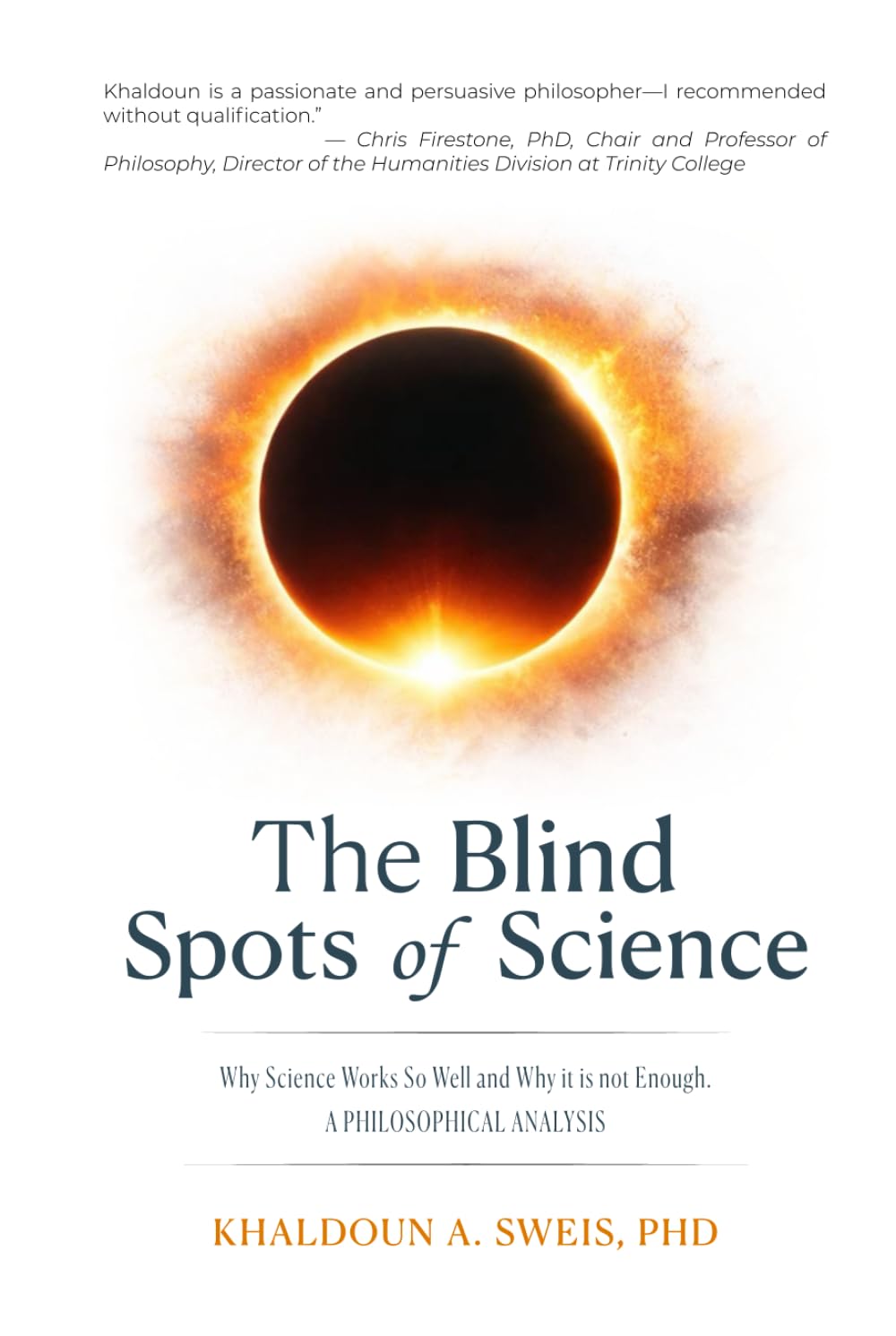
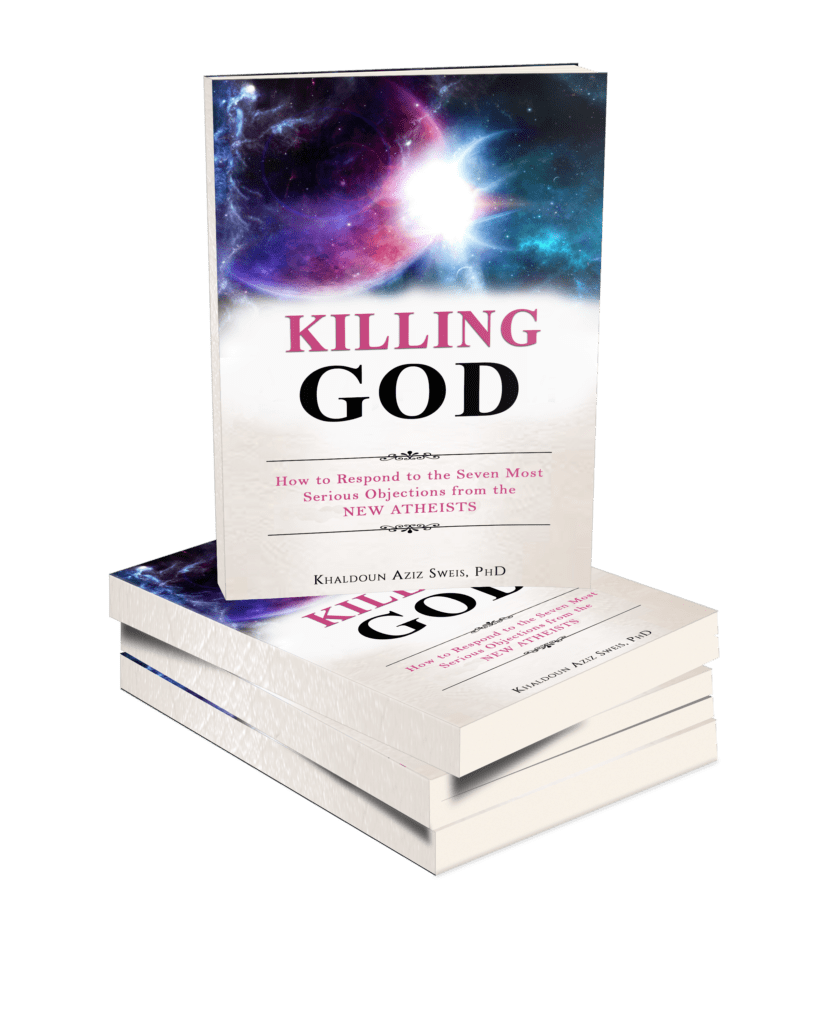
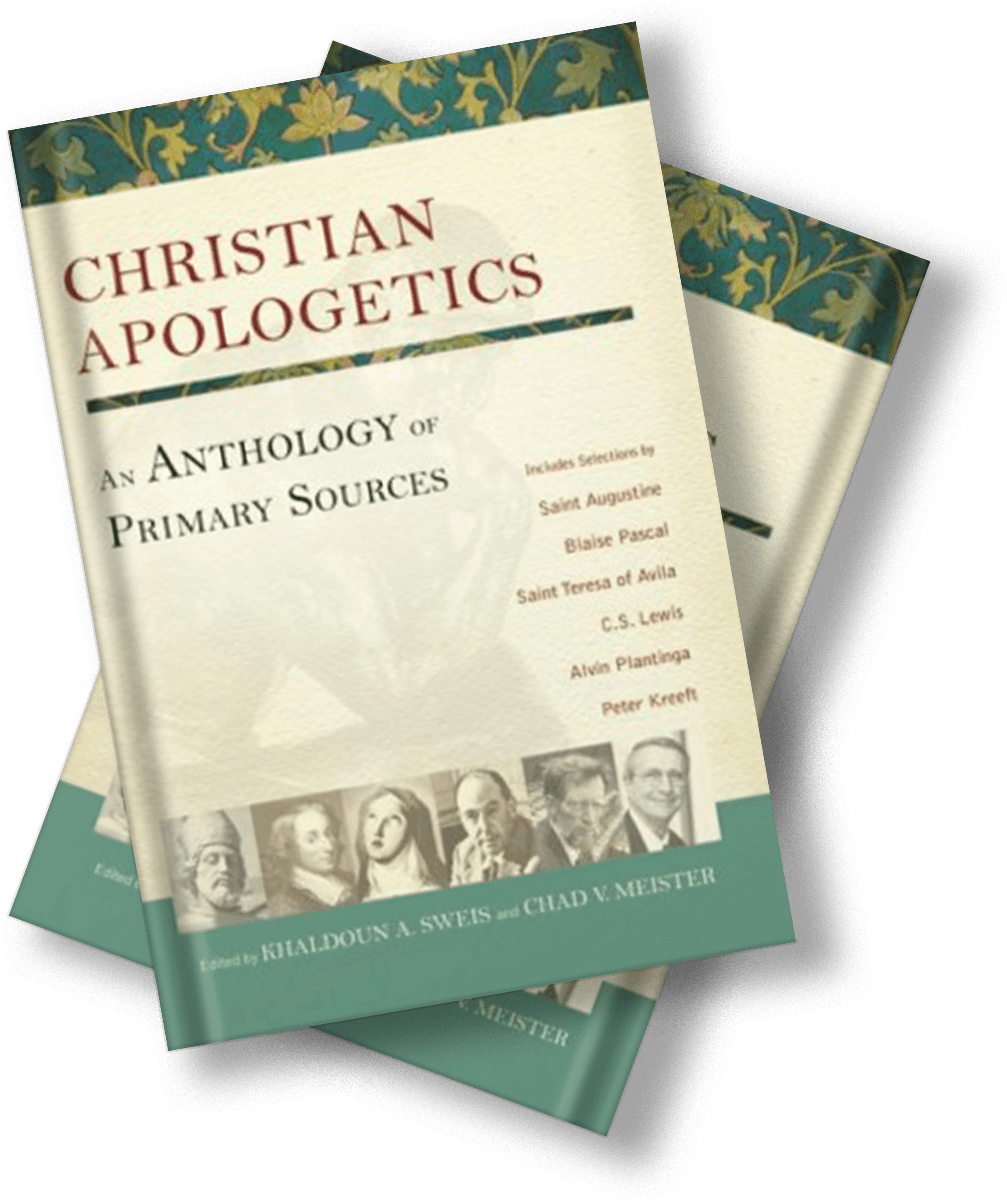
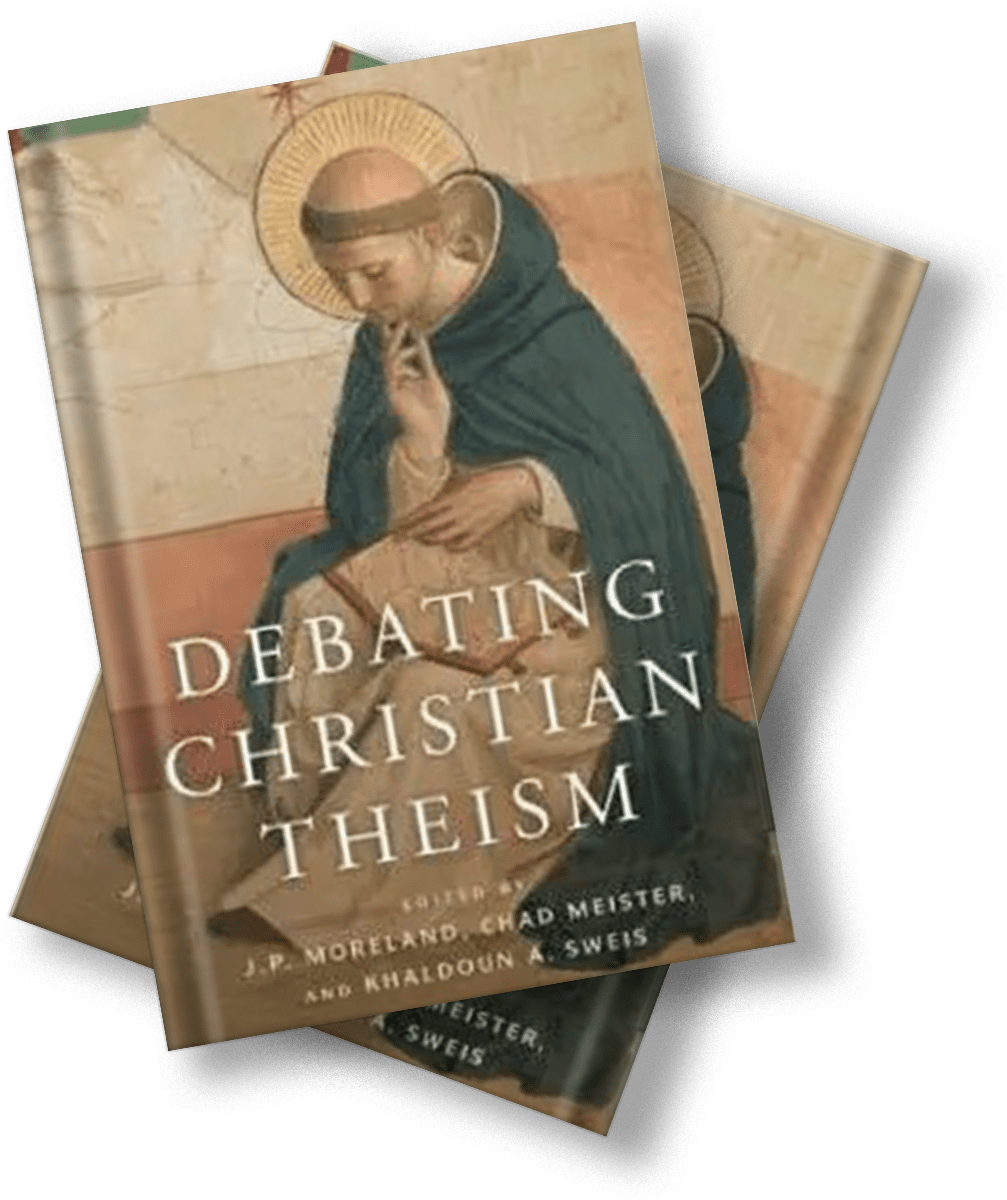
Explore My Books and Publications — Philosophy, Christian apologetics, critical thinking, and the relationship between faith, science, and the human person.
Read More on My Substack: Logically Faithful — Essays on philosophy, faith, purpose, identity, relationships, and living wisely in a changing world.
Ready to Find Clarity, Purpose, and Direction?
Have you achieved success but still wonder whether you are living the life you were meant to live?
Perhaps you are facing a career transition, struggling to make a consequential decision, recovering from failure, or recognizing that the life you have built is no longer aligned with your deepest convictions.
Through Logically Faithful Executive and Personal Coaching, I help executives, professionals, and accomplished men examine their blind spots, strengthen their judgment, confront difficult questions, and build lives marked by greater purpose, discipline, responsibility, and peace.
My approach draws upon more than two decades of teaching philosophy, published scholarship, practical psychology, Christian thought, and the enduring wisdom of thinkers who have wrestled seriously with the human condition.
The goal is not merely to become more productive, successful, or admired. It is to become more thoughtful, courageous, morally grounded, and capable of living a life that holds together.
If you are ready to stop drifting and begin examining your life with greater clarity, I invite you to take the next step.
Explore Executive and Personal Coaching
Schedule a Confidential Introductory Conversation
Explore the Free Phoenix Assessment and Other Resources
Join the Conversation
If you enjoy serious conversations about God, faith, philosophy, personal identity, and the search for meaning, I invite you to join my growing community of readers and thinkers.
Subscribe to Logically Faithful on Substack for thoughtful essays on living wisely, thinking clearly, and believing courageously.
If this article helped you think differently about your own life, consider sharing it with someone who may be facing a crossroads. Sometimes a thoughtful question, offered at the right moment, can become the beginning of a meaningful change.
Your life is not merely a problem to solve or a career to manage. It is a responsibility to embrace, a calling to discern, and a gift to live faithfully.
Khaldoun Aziz Sweis, PhD
Associate Professor of Philosophy | Humanities Department Chair
Author | Executive Coach | Founder, Chicago Philosophy Association
Logically Faithful — Think Clearly. Live Wisely. Believe Courageously.
You Might Like These
Stop Seeking Happiness: Finding the True Purpose of Life
Stop chasing happiness and discover the true purpose of life. Find lasting meaning through duty and honor within the deep Christian meaning of life.
4 Unexpected Ways to Address Marriage Problems
Facing marriage problems? Get Christian marriage advice on Biblical submission and 4 ways to address a suffering marriage.
Is It Possible to Know God? An Honest Look at the Christian Message
Can a person really know God? An honest, plain language look at the Christian message, the Roman Road, and why Jesus is at the center of it.