Don’t miss anything! Sign up for my newsletter & join our Facebook community of 1,000+ like minded thinkers!
- Home
- Christian Cultural Commentary
- Confirmation Bias
Confirmation Bias: Why A Closed Mind Is — at Times — the Best of Minds
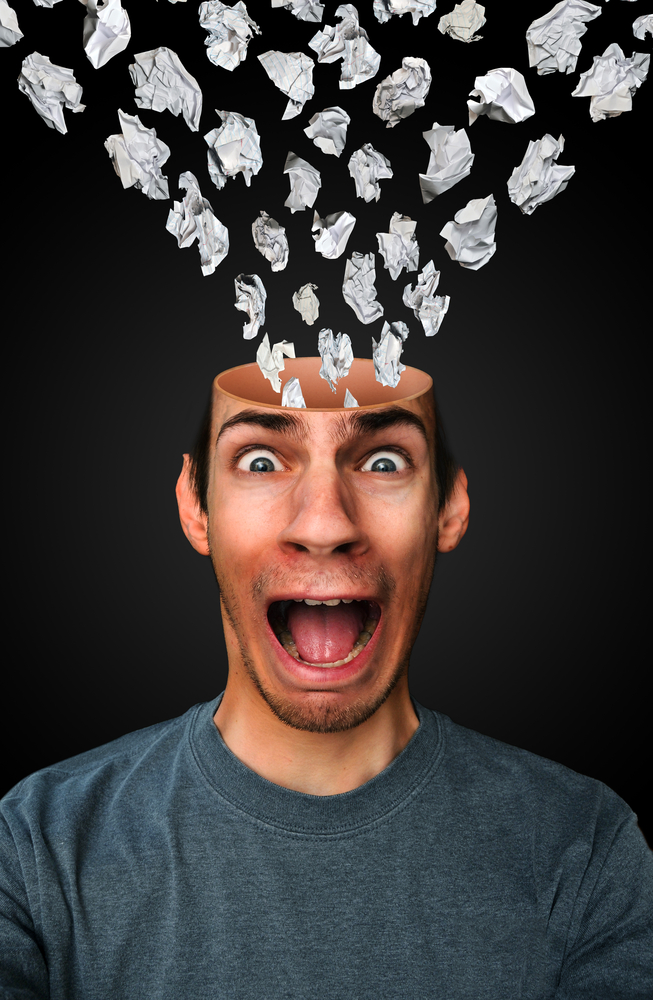
Is it possible that the danger of an open mind is real? Yes. If your mind is all-encompassing and you are willing to accept whatever comes into it, then remember that the only thing that accepts anything and rejects nothing is a sewer. G.K. Chesterton said it best: “The object of opening the mind, as of opening the mouth, is to shut it again on something solid” (Autobiography). Avoiding mental sewage is as important as being aware of our confirmation biases, as we learn to think clearly and live vibrantly.
“It is the mark of an educated mind to be able to entertain a thought without accepting it.” — Aristotle, Metaphysics
Key Ideas in Brief
- The Danger of an Open Mind: Total openness without a filter leads to the uncritical acceptance of "mental sewage".
- Intellectual Discernment: What we consume mentally through media and literature requires as much scrutiny as the food we eat.
- The Cognitive Blind Spot: Humans possess a "perpetual error" of understanding that favors information affirming their existing beliefs.
- Confirmation Bias Defined: This psychological phenomenon involves seeking out affirmative evidence while ignoring negatives.
- Selective Thinking: This process affects everyone — from the religious to the atheist — influencing how we interpret evidence like Bible contradictions.
The Necessity of Intellectual Discernment
I was in a bookstore a few years ago and found an old copy of Aristotle’s Nicomachean Ethics — a classic on ethical discourse. When I was about to pay for it, the clerk asked me if I would donate to their literacy program for children. I was happy to contribute, and as I reached for my wallet, I asked, “What are the children reading?”. She shot back, “Anything they want, we don’t care what they read, as long as they read!”
I was startled. I asked, “If someone told you that ‘it does not matter what children eat, as long as they eat,’ would you agree?”. She ignored my question, became upset at me, and simply repeated her mantra.
My point stands: what we listen to, watch, and who we spend time with matters. It really does matter. We need to have filters on our minds or eyes, as they are the windows of our soul. Practice intellectual discernment; what we read is just as important as what we feed ourselves. So then, we ought to watch what we feed our soul. But at the same time, we have to be aware of what psychologists call confirmation bias. It is our cognitive blind spot.
Identifying Your Cognitive Blind Spot
Confirmation bias is best summed up by what Francis Bacon said:
“It is the peculiar and perpetual error of the human understanding to be more moved and excited by affirmatives than by negatives.”
This confirmation bias refers to a type of selective thinking where one person tends to ignore evidence that goes against one’s beliefs, whereby one tends to notice and to look for what confirms one’s beliefs!
Confirmation Bias and Selective Thinking
For example, if you believe that the President is an awful leader and his position on the war on terror is weak, then news showing his problematic foreign policy will confirm your presuppositions and dispositions. Because of this cognitive blind spot, you will find yourself agreeing with it before you even see the evidence for it.
However, the opposite will be the case if you are predisposed to like the President.
This can be applied to religion as much as to anything else. If you are a Christian and there is news found to show contradictions in the Bible, you will naturally try to explain them away. The same is true of some committed atheists. They will not try to explain them away but will use these “contradictions” to confirm their presuppositions and dispositions against God and the Bible, often through selective thinking, without even looking at the evidence. See my prior post on Bible Contradictions. [link to: https://www.logicallyfaithful.com/what-about-the-bible-contradictions/]
What do you think? How can we overcome our bias?
See Science Daily for more information on Confirmation Bias.
Exploring These Questions Personally
Some questions about faith and doubt cannot be resolved by arguments alone. They are lived, wrestled with, and experienced over time.
If you’d like thoughtful, non-judgmental ways to explore these questions more deeply, here are a few options:
Continue The Conversation
Wrestling with questions about God, faith, and meaning?
Join the newsletter for thoughtful reflections on belief, doubt, philosophy, and the search for truth, plus practical insights to live wisely, and believe courageously.
You Might Like These
Reason, God And The Meaning Of Life: Dr. Chris Firestone,PhD
Explore the limits of reason in Kant’s philosophy & what they mean for God, morality, and meaning of life in this conversation with philosopher Chris Firestone.
Unity of Truth and the Plurality of Faiths
Do all religions worship the same God? This lecture explores religious pluralism, universalism, and unity of truth through a philosophy of religion perspective.
Hell, the Soul, and Evil with Richard Swinburne
The philosophy of hell and the soul explored with Richard Swinburne — and how these ideas shape Christian philosophy of the afterlife and human nature.