Don’t miss anything! Sign up for my newsletter & join our Facebook community of 1,000+ like minded thinkers!
- Home
- Evidence for God
- What Even God Cannot Do
What Even God Cannot Do: Understanding God's Omnipotence
There are things even what God cannot do might surprise you.
Before you dismiss this as blasphemy or the ravings of a wacky philosopher, continue reading. The answer is astonishing!
Imagine you were in an undiscovered part of the world and met a magician who claimed that she could perform real magic. She wanted to sell you a sword sharp enough to cut through anything. At the same time, she wanted to sell you a shield that cannot be cut by any sword. You would know something is fishy because if this sword existed, then this shield would not. If this shield existed, then this sword would not. Why? Because they would defy the laws of logic — the foundation for our universe. An irresistible force and an immovable object cannot exist together in the same world.
Key Ideas in Brief
- Logical Consistency: God's Omnipotence does not mean the ability to do the logically impossible, such as creating "married bachelors".
- Biblical Basis: Scripture describes God as the "Almighty," possessing all power and authority to fulfill His decisions.
- The Omnipotence Paradox: Classic objections, like whether God can create a rock He cannot lift, are often dismissed by theologians as verbal nonsense rather than true limitations of power.
- Praise-worthy Power: Divine power is defined as the "power of the best and the highest," lacking the "liability" of weakness or self-destruction.
- Power in Love: The ultimate expression of power is found in God's ability to give humanity the free will to say "No" to His omnipotence.
Defining God's Omnipotence

Now consider, what does it mean for God to be all-powerful?
For example, can God make another God? Can God make a rabbit He cannot catch, or make so many blueberry pancakes He cannot eat, or a video game He cannot beat? We could go on and on — you get the picture!
The word omnipotence is derived from two Latin words: omni ("all") and potens ("powerful"); thus, it means "all-powerful". Whereas God’s freedom refers to the fact that there are no external constraints on God’s decisions, God's Omnipotence has reference to His own power to do what He decides to do.
This power is frequently mentioned in Scripture.
The rhetorical question, “Is anything too hard for the Lord?” (Gen. 18:14; Jer. 32:27) certainly implies that nothing is too hard for the Lord. In fact, Jeremiah says to God, “nothing is too hard for you” (Jer. 32:17). Paul says that God is “able to do far more abundantly than all that we ask or think” (Eph. 3:20), and God is called the “Almighty” (2 Cor. 6:18; Rev. 1:8), a term (Gk. παντοκράτωρ) that suggests the possession of all power and authority. Furthermore, the angel Gabriel says to Mary, “With God nothing will be impossible” (Luke 1:37), and Jesus says, “With God all things are possible” (Matt. 19:26). (Wayne Grudem, Systematic Theology)
The Omnipotence Paradox and Logical Possibility
Theologians worldwide better understand God's Omnipotence to mean that God is the being of maximum power — the most powerful being in the universe. As my five-year-old son Daniel says, “omnipotent means God is stronger and very mightier than all the people in the world!”
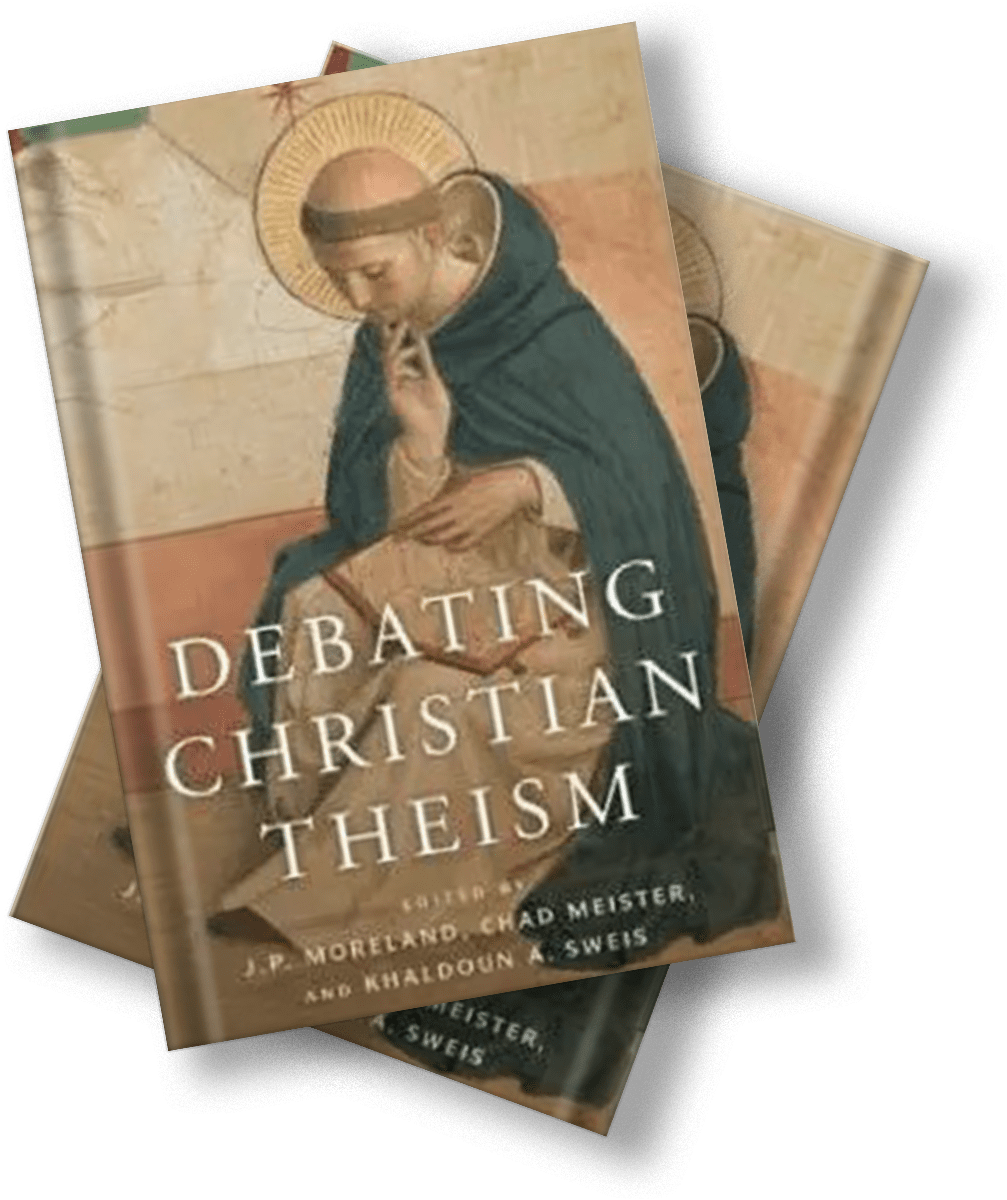
In my book, Debating Christian Theism, in the article “The Coherence of Divine Power,” Philosopher Charles Taliaferro wrote:
“Divine power is not, then, an abstract or abstruse concept of maximal brute power (the power to do anything whatsoever), but a concept of praise-worthy power, the power of the best and the highest (optimus maximus).”
Even with this omnipotence, there are things what God cannot do. He cannot lie or sin, nor can He make logically impossible things exist and not exist simultaneously, or create lying truth-tellers or married bachelors.
If God could override the laws of logic, then He could create 10,000 blueberry pancakes that He can’t eat while eating them at the same time. Or create a rabbit he cannot catch and catch it. So if God is over and above the laws of logic, then he can do illogical things, which I don’t think will work but it does address this problem. Aquinas argued that God is able to do impossible things like part the Red Sea or raise the dead, but He cannot do logically impossible things. He can walk on water, but He cannot walk on water and not walk on water at the same time. Descartes, on the other hand, held that God could do the logically impossible, like making 1+1 equal something other than 2.
However, for God to create a rock He cannot lift (the classic omnipotence paradox) or a rabbit He cannot catch defies logic — which is against His own character, for God is the Logos.
Power vs. Powerlessness
Many of these objections sound great and lofty but, when examined, come down to verbal semantics and nonsense.
But does this undermine the power of God? Not at all.
Consider the analysis from Anselm:
There are things that God cannot do, for instance lying, being corrupted, making what is true to be false or what has been done to not be done. It seems that a truly omnipotent being ought to be able to do these things. To be able to do such things, Anselm suggests, is not really to have a power (potentia), but really a kind of powerlessness (impotentia). “For one who can do these things, can do what is not advantageous to oneself and what one ought not do. The more a person can do these things, the more adversity and perversity can do against that person, and the less that person can do against these.” (S., p. 105) So, one who does these things does them through powerlessness, through having one’s agency subjected to that of something other, rather than through one’s power. This, as Anselm explains, relies on an inexact manner of speaking, where one expresses powerlessness or inability as a kind of power or ability. Source
Professor Tim Mawson of Oxford wrote regarding God's Omnipotence:
Consider this argument: we very often have the ability to commit suicide. We are dependent on many things for our continued existence. If these things altered, we’d cease to exist and we usually have it within our power to alter many of these things. Is our dependency on these other things a sign of our strength — a power — or is it a sign of our weakness — a liability? Should we say, ‘I have the power to be killed by lots of different things; I am therefore more powerful than Superman, who does not have the power to be killed by anything other than Kryptonite,’ or should we say, ‘I have the liability to be killed by lots of different things; I am therefore less powerful than Superman, who does not have the liability to be killed by anything other than Kryptonite’? Obviously, we should say the latter; to be dependent on something for one’s existence is a sign of weakness. Superman can only be killed by Kryptonite. So he is much more powerful than we are; but he still has a weakness. God, being omnipotent, would be stripped of any element of this liability — there would be nothing that could cause him not to exist, not even himself….So, how — at the end of all this — would I suggest we define omnipotence? …I would suggest we define an omnipotent being as the most powerful being that it is logically possible there could be; an omnipotent being is a being with the most power-granting set of abilities that it is logically possible anyone might have. (Belief in God, Oxford page 32)
Exploring These Questions Personally
Some questions about faith and doubt cannot be resolved by arguments alone. They are lived, wrestled with, and experienced over time.
If you’d like thoughtful, non-judgmental ways to explore these questions more deeply, here are a few options:
Continue The Conversation
Wrestling with questions about God, faith, and meaning?
Join the newsletter for thoughtful reflections on belief, doubt, philosophy, and the search for truth, plus practical insights to live wisely, and believe courageously.
You Might Like These
Reason, God And The Meaning Of Life: Dr. Chris Firestone,PhD
Explore the limits of reason in Kant’s philosophy & what they mean for God, morality, and meaning of life in this conversation with philosopher Chris Firestone.
Unity of Truth and the Plurality of Faiths
Do all religions worship the same God? This lecture explores religious pluralism, universalism, and unity of truth through a philosophy of religion perspective.
Hell, the Soul, and Evil with Richard Swinburne
The philosophy of hell and the soul explored with Richard Swinburne — and how these ideas shape Christian philosophy of the afterlife and human nature.