Don’t miss anything! Sign up for my newsletter & join our Facebook community of 1,000+ like minded thinkers!
Kierkegaard’s Three Stages of Life: An Analysis
In this episode, I have a profound interaction on the three stages of life that Kierkegaard proposed: the Aesthetic, the Ethical, and Religious.
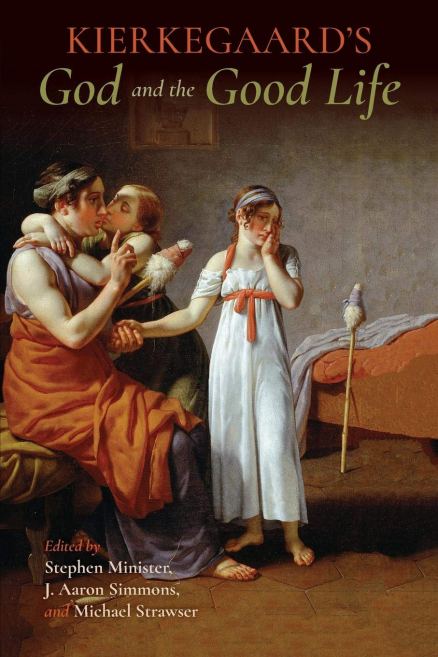
Joining me to discuss the Three Stages of life Dr and Professor J Aaron Simmons. Aaron is the author of many books including Kierkegaard’s God and the Good Life (Indiana UP, 2017).
I was at the funeral of a very dear man and friend recently. As we stood in the graveyard, carefully maintaining our "social distance," the silence was heavy with more than just the grief of loss. We were discussing life and the ultimate "why"—why bother living, working, or loving when everything we build will eventually be reclaimed by the earth?
It is easy to fall into despair when we look too closely at the horizon of our own mortality. Yet, as Søren Kierkegaard suggests, the most dangerous form of despair isn't the one that makes us weep at funerals; it is the despair we don’t even know we are in. It is the quiet, numbing "sickness unto death" that masks itself as a normal, busy life.
To unpack this, I sat down with Dr. J. Aaron Simmons, a renowned philosophy professor and author of Kierkegaard’s God and the Good Life.
Together, we explored Kierkegaard’s map of human existence—the "Three Stages of Life"—and how they offer a way out of the void and into a life of passionate meaning.
Prefer Listening?
Listen to the full podcast episode below for a deeper exploration.
Key Ideas in Brief
- Despair is a misalignment of the self: It is not just a feeling of sadness, but a failure to relate correctly to oneself and to the Transcendent.
- The Aesthetic Stage is passive: It is defined by living for the moment and the "interesting," but it inevitably ends in boredom and fragmentation.
- The Ethical Stage is about ownership: It marks the transition from being a spectator to being an actor who takes responsibility for their life through commitment.
- The Religious Stage is the "Leap": It is not an irrational jump, but a passionate commitment to a relationship with God that transcends universal moral laws.
- Eternity asks one question: According to Kierkegaard, the only thing that matters in the end is whether you lived in despair or found a way to become a true "self."
The Sickness We Don't Know We Have
Before we can understand the stages, we must understand the problem they are meant to solve: Despair. In the prompt’s opening quote from The Sickness Unto Death, Kierkegaard argues that eternity doesn’t care about your titles, your wealth, or your fame. It asks only if you lived in despair.
Dr. Simmons notes that for Kierkegaard, the human self is a "relation that relates itself to itself." We are a tension between the finite (our bodies, our daily chores, our bank accounts) and the infinite (our dreams, our longing for meaning, our connection to God). Despair occurs when we lean too hard into one side and ignore the other.
The most "dreadful" state, as Kierkegaard puts it, is being "manacled to yourself in despair" without even knowing it. This is the person who is perfectly successful by worldly standards but has no internal "center." They are a shell, and the three stages are the path toward finding that center.
Stage 1: The Aesthetic Life – The Trap of the "Interesting"
The first stage is the Aesthetic. Most of us start here, and many never leave. The Aesthetic life is governed by one primary goal: avoiding boredom.
In our conversation, Dr. Simmons explained that the "Aesthete" is someone who lives for the immediate. They are the ultimate consumer. This isn't just about physical hedonism; it can be intellectual or cultural. The Aesthete looks for the "interesting," the "new," and the "exciting."
The problem with the Aesthetic life is that it is fundamentally passive. Things happen to the Aesthete. They are defined by their environment, their moods, and their impulses. If they aren't being entertained, they are miserable. Consequently, the Aesthetic life eventually collapses because no amount of novelty can satisfy the infinite longing of the soul. The "interesting" eventually becomes mundane, and the Aesthete is left in a state of "melancholy"—a soft despair that realizes life has no narrative arc.
Stage 2: The Ethical Life – The Courage to Choose
The transition to the Ethical stage happens through a "choice." Not just a choice between coffee or tea, but the choice to choose.
Kierkegaard uses the example of marriage to illustrate the Ethical. While the Aesthete falls in and out of love based on feelings (the "aesthetic" experience of romance), the Ethical person commits. They take ownership of their life. They say, "I am the author of my actions, and I am responsible for my duties."
Dr. Simmons points out that the Ethical stage moves the individual from the "singular" (me and my desires) to the "universal" (me and my obligations to society, family, and law). There is a profound dignity in the Ethical life. It provides a sense of self and stability. However, even this stage has a ceiling. Eventually, the Ethical person realizes they cannot live up to the very laws they have committed to. They encounter guilt. They realize that being "good" isn't enough to heal the fundamental fracture in the human soul.
Stage 3: The Religious Life – The Leap into the Paradox
This brings us to the Religious stage, which Kierkegaard often divided into "Religiousness A" (general religiousness) and "Religiousness B" (specifically Christianity).
The Religious stage is where the individual realizes that their primary relationship is not with society or even with their own moral code, but with God. This is the stage of the "Knight of Faith."
Dr. Simmons and I spent significant time discussing the "Leap of Faith." In popular culture, this is often seen as "blind faith" or "checking your brain at the door." But Simmons argues that for Kierkegaard, the leap is trans-rational, not irrational. It is the recognition that human reason has reached its limit. Reason can tell you that life is finite, but it cannot give you the passion to live in the face of death.
In the Religious stage, the individual is "higher than the universal." This is famously illustrated by Abraham and Isaac. Abraham is called to do something that the Ethical stage (universal law) forbids. He must trust God in the face of the "absurd." This stage is characterized by a "passionate inwardness"—a direct, unmediated relationship with the Transcendent that gives the person the courage to be a "self" even when the world is falling apart.
Kierkegaard vs. Nietzsche: Two Paths from the Same Grave
During the podcast, we touched on the fascinating comparison between Kierkegaard and Friedrich Nietzsche. Both men looked at the "death of God" in modern culture and the resulting nihilism.
Nietzsche’s answer was the Übermensch (the Overman)—the idea that we must become strong enough to invent our own values in a silent universe. We walk alone and find power in our solitude.
Kierkegaard’s answer is the opposite. He agrees that the universe feels silent and that we are in a crisis of meaning, but he argues that we find our strength not by walking alone, but by "walking with God." Where Nietzsche finds power, Kierkegaard finds rest. He suggests that the difficulty of life is not something to be escaped or conquered through sheer will, but something to be endured through a relationship with the One who created us.
Which Stage Are You In?
As we wrapped up our discussion, the weight of Kierkegaard’s question remained: Have you lived in despair?
If you are living for the next dopamine hit from social media or your next vacation, you might be trapped in the Aesthetic. If you are exhausted by the weight of trying to be "perfect" and "good" for everyone else, you might be hitting the ceiling of the Ethical.
Kierkegaard invites us to the Religious—to the "leap" of trust. This isn't a call to become "religious" in a dry, ritualistic sense. It is a call to awaken from the "gnawing secret" of despair and to find a life manacled not to ourselves, but to the Eternal.
As I walked away from that funeral three days ago, I realized that while we may lose everything we love in the finite world, the Religious stage offers us a hope that is not subject to "social distancing" or death. It offers us a self that is finally, and logically, at home.
Exploring These Questions Personally
Some questions about faith and doubt cannot be resolved by arguments alone. They are lived, wrestled with, and experienced over time.
If you’d like thoughtful, non-judgmental ways to explore these questions more deeply, here are a few options:
Continue the Conversation
Wrestling with questions about God, faith, and meaning?
Join the newsletter for thoughtful reflections on belief, doubt, philosophy, and the search for truth, plus practical insights to live wisely, and believe courageously.
You Might Like These
Reason, God And The Meaning Of Life: Dr. Chris Firestone,PhD
Explore the limits of reason in Kant’s philosophy & what they mean for God, morality, and meaning of life in this conversation with philosopher Chris Firestone.
Unity of Truth and the Plurality of Faiths
Do all religions worship the same God? This lecture explores religious pluralism, universalism, and unity of truth through a philosophy of religion perspective.
Hell, the Soul, and Evil with Richard Swinburne
The philosophy of hell and the soul explored with Richard Swinburne — and how these ideas shape Christian philosophy of the afterlife and human nature.