Don’t miss anything! Sign up for my newsletter & join our Facebook community of 1,000+ like minded thinkers!
Truth Does Not Care About Our Feelings: A Conversation with Paul Copan
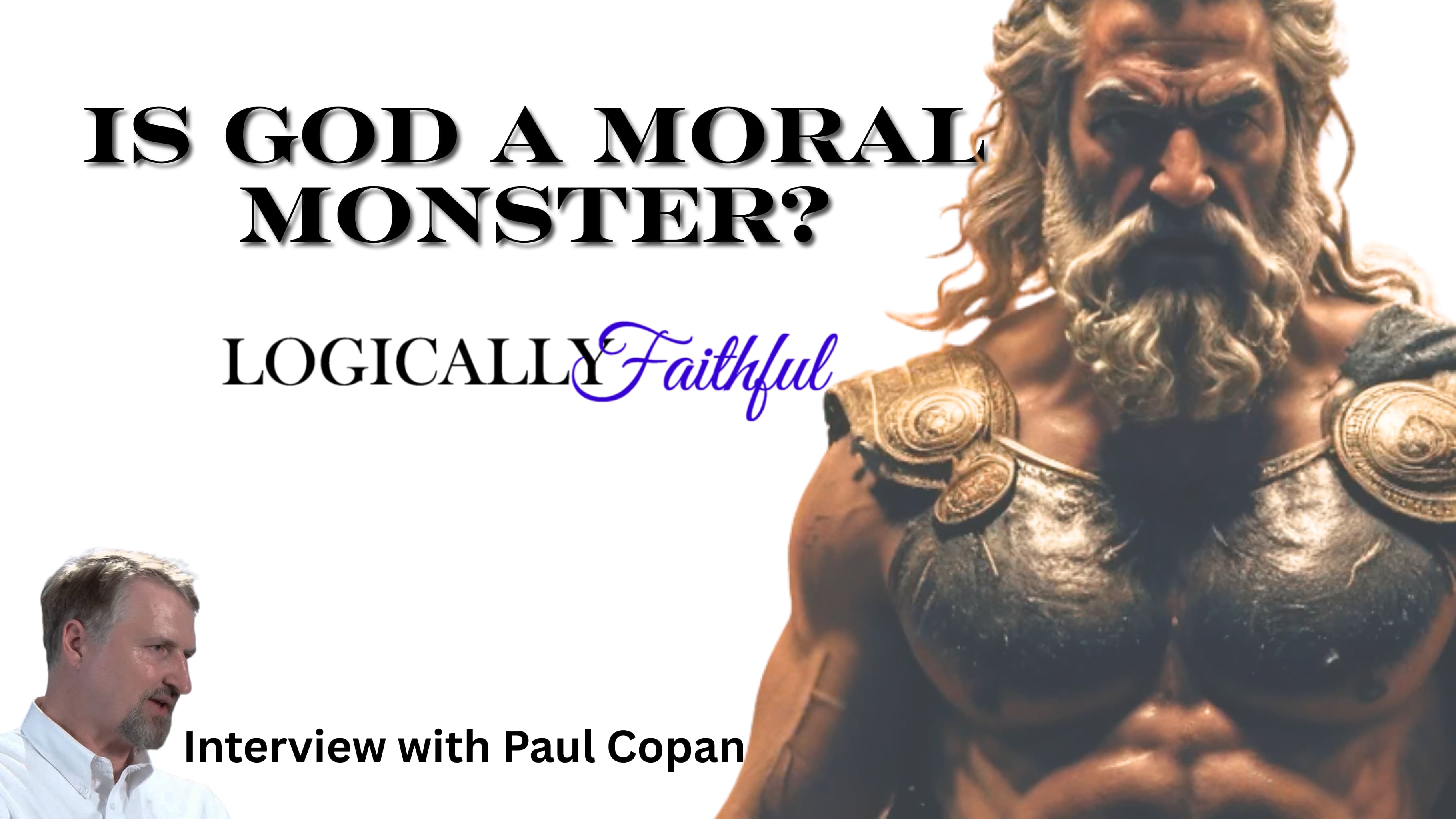
I recently had the honor of interviewing Dr. Paul Copan.
Paul is married to Jacqueline, together they have six children. In his spare time Paul is a Christian theologian, analytic philosopher, apologist, and author of multiple books and articles. He is currently a professor at the Palm Beach Atlantic University and holds the endowed Pledger Family Chair of Philosophy and Ethics.
In this interview we discuss truth, logic, God, faith, Jesus, universalism, tolorance, and even the troubling commands of God to kill what looks like innocent peoples.
Key Ideas in Brief
- Truth is correspondence: It is not a matter of internal sincerity but of how well our beliefs align with external reality.
- Logic is an extension of God: Rationality isn't a "rule" God follows; it is a reflection of His consistent, non-contradictory character.
- Context resolves "Moral Monster" claims: Understanding Ancient Near Eastern rhetoric and hyperbole is essential to interpreting Old Testament violence.
- Exclusivity is unavoidable: Every worldview, including pluralism, makes exclusive claims about the nature of reality.
- Tolerance requires disagreement: Real tolerance isn't about pretending everyone is right; it’s about treating people with dignity when we believe they are wrong.
Prefer Listening?
Listen to the full podcast episode below for a deeper exploration.
The Unyielding Nature of Reality
We often confuse "sincerity" with "truth." We think that if someone believes something deeply enough, or if it makes them a "better person," then it is "true for them." But as Dr. Copan points out, truth is defined by correspondence. A map is "true" if it correctly represents the terrain; a belief is "true" if it correctly represents the world.
If you sincerely believe the bridge ahead is stable when it has actually collapsed, your sincerity will not save your car from the ravine. In the same way, the Christian faith stands or falls not on its emotional utility, but on its historical and logical truth-claims.
Confronting the "Moral Monster"
We didn't shy away from the hard questions. Critics often point to the "troubling commands" of God—such as the conquest of Canaan—as evidence that the God of the Bible is a "moral monster."
Dr. Copan’s response is grounded in rigorous scholarship. He explains that we must read these texts through the lens of Ancient Near Eastern "hagiographic hyperbole." When ancient kings said they "destroyed everything that breathes," it was a standard military idiom for a decisive victory, not necessarily a literal mandate for total extermination. Furthermore, these judgments were specific responses to extreme institutionalized wickedness (like child sacrifice), not arbitrary acts of cruelty. By understanding the genre and the culture, the "monster" begins to look much more like a God of justice protecting the moral arc of history.
The Problem with "My Truth"
Finally, we addressed the modern push toward universalism and a redefined version of tolerance. If "truth does not care about our feelings," then we cannot simply decide that all paths lead to the same destination.
Copan notes that even the statement "all religions are equally true" is an exclusive claim that excludes the possibility that one might be uniquely correct. True tolerance doesn't mean we stop searching for what is actually true; it means we hold our convictions with humility and love, recognizing that while truth is objective, our grasp of it is often a journey.
In the end, Christianity doesn't ask us to park our brains at the door. It invites us to follow the truth wherever it leads—even when it challenges our feelings—knowing that at the end of that road, we find not just a set of facts, but a Person who is the Truth.
Exploring These Questions Personally
Some questions about faith and doubt cannot be resolved by arguments alone. They are lived, wrestled with, and experienced over time.
If you’d like thoughtful, non-judgmental ways to explore these questions more deeply, here are a few options:
Continue the Conversation
Wrestling with questions about God, faith, and meaning?
Join the newsletter for thoughtful reflections on belief, doubt, philosophy, and the search for truth, plus practical insights to live wisely, and believe courageously.