Don’t miss anything! Sign up for my newsletter & join our Facebook community of 1,000+ like minded thinkers!
Why You Most Certainly Will Fail to Reach Your Secular Friends

Originally published on Ed Stetzer's blog, The Exchange, in March 2017. Featured by Eric Metaxas on BreakPoint and in Christian Today, and reprinted by The Christian Post and CBMC.
Man has, in Aldous Huxley's phrase, "an infinite appetite for distraction." Thus, our pastimes have evolved into weapons of mass distraction: Facebook, Twitter, Instagram, LinkedIn, Pinterest, Snapchat, YouTube, and on and on. Pascal told us "that the sole cause of man's unhappiness is that he does not know how to stay quietly in his room" (Pensée 136).
"I don't want or need your god, thank you very much," she said as she walked away from the boy giving his tracts. He had a look of shock and awe. We Christians try to reach our secular friends with transcendent truths, but we fail at it not because our methods are not stellar or impeccable, nor because we did not do the proper marketing or sociological, demographical research (although these are very important). The bottom line is that for many, they do not want or need God. (At least that is the story many have swallowed. See Romans 1.)
We err when we ignore the trends and zeitgeist of the times, and we make grave mistakes when we try to stereotype people into this or that category.
According to the Pew Research Center, those who select "none" as their religious affiliation are growing at record rates. They not only think that they don't need God, but many have never been given a single reason as to why He is relevant to their lives.
They find discussion of these issues like a perpetual hamster running in circles, thus they fill their lives with distractions and don't want to be bothered with ultimate questions. And when we try to give the gospel to them, they ignore us as radicals and go back to drinking Frappuccinos and watching cat videos on their iPhone.
When I am told by someone that they don't believe in God, I ask, "What god do you not believe in?" Nine times out of ten, it is usually a god I do not believe in either! The caricatures and misrepresentations of the Christian God are abundant.
Below are three principles that have worked for me in presenting in the secular arena for the past 15 years. I believe these leave a fragrance for Christ that cannot be ignored.
Principle #1: ENGAGE. Sit at the table.
Get a seat at the secular public square where you will have the attention of your secular friends.
What I mean is for us to make a difference by connecting with people, getting involved with Apple computers, with Congress, with your high school leadership team, with sports or whatever place the Lord opens a door to. Sit at their table, the table where most of the major decisions are made for government, culture, media, and education. By the way, these are also the four major arenas of secular thought in the world.
Use the pluralism diversity thesis to gain a seat at their table. After all, according to them, Christianity is just another paradigm, and since they don't want to be intolerant of any viewpoint, you should be allowed to speak too.
Principle #2: ENQUIRE. Turn the table.
We must be open to listening and taking the important questions our friends ask, turning them around. We must allow people to open up and connect with us in a genuine and uncontrived manner. In doing so, we can expose the unstable foundations of their worldview.
Scripture says to "walk in wisdom toward outsiders, making the best use of the time. Let your speech always be gracious, seasoned with salt, so that you may know how you ought to answer each person" (Colossians 4:5-6).
"I do not believe in anything that is not physical. I only believe what science tells me is true," is what a student of mine told me as he came into my office. I asked him if his idea was physical. He paused. He was invoking a first person perspective, which is itself not physical. By the way, the idea that "I cannot believe anything that is non-physical" is itself a non-physical idea.
This is what we call a self-refuting statement. Once he realized that the table was flipped and his foundation was false, I was able to share with him ten other things science itself cannot prove, which I develop fully in my book The Blind Spots of Science.
The most brilliant example of turning the tables in all of literature is in the story of Nathan and King David in 2 Samuel 12. Nathan does not condemn David; rather, he gets David to condemn himself. Then, more productive conversations can emerge.
Principle #3: EDIFY. Reach across the table.
Love individual people redemptively.
The opposite of love is not hate, but indifference. God either loves or hates, but He is never indifferent.
George, whose father died over ten years ago, never forgot that I was one of his only friends who came to that funeral. If you know people long enough, they will inevitably go through difficult times. This is the opportunity to show them the love of Christ. Be with them to rejoice with them and weep with them. It is demanding, if not impossible, for people to forget that! When the heart is tender, it is more open than any other time!
The gospel is ultimately about relationships, if it is about anything at all. Jesus said, "You are the salt of the earth... You are the light of the world" (Matthew 5:13-16). How are you going to be His salt and light today?
Where this article has been featured and republished
- Ed Stetzer, The Exchange (original publication, March 16, 2017): read the archived original
- BreakPoint with Eric Metaxas, "How to Reach Your Secular Neighbor" (April 2017): read it on BreakPoint, also reprinted by The Christian Post
- Christian Today, "How Christians Can Reach Their Secular Neighbour" (April 6, 2017): read it
- Point of View with Kerby Anderson, radio commentary "Reaching Secular Friends" (April 7, 2017): read or listen
- CBMC International, featured news: read it
- Pneuma Review, listed among the "Other Significant Articles" of Winter 2017: see the list
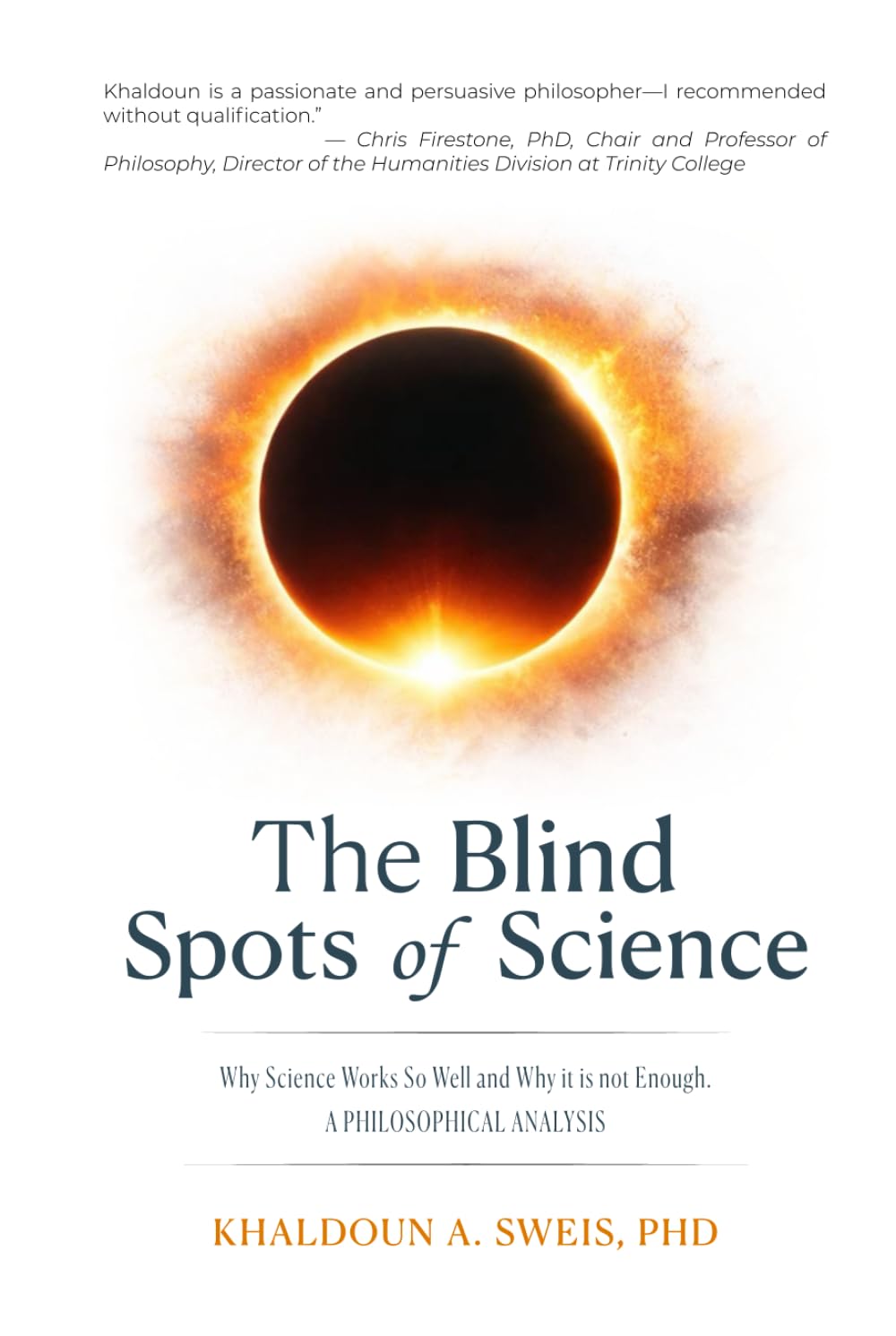
Go deeper: The Blind Spots of Science
The student who said he only believed what science could prove is where this book began. It unpacks the ten things science cannot prove, and why faith and reason are not enemies.
Get the book on Amazon → | Read: 10 Things Science Cannot Prove
About the author. Dr. Khaldoun A. Sweis is an executive and leadership coach, Associate Professor of Philosophy at Olive-Harvey College in Chicago, a C.S. Lewis Institute Fellow, and has taught philosophy at Oxford.
Want to lead with this kind of clarity? Take the free Phoenix Score assessment at logicallyfaithful.com.